
SEO Myths to Bury at SEO Week 2026
Heather Ferris
January 23, 2026
MYTH #1: “Ranking #1 Is Still the Primary Goal of SEO”
Why it’s a myth:
In 2026, rankings are no longer a reliable representation for visibility or impact. AI Overviews, agentic answers, zero-click, and conversational interfaces frequently satisfy intent without a click. You can “rank” and still be invisible to AI search functions.
What REplaces It:
Visibility across AI surfaces, accurate representation in synthesized answers, and influence over decisions. SERP position still matters, ranking is still one of the goals, but it’s not the only or even primary goal anymore.
For most of SEO’s history, ranking #1 was the goal. Top the SERP, capture attention, earn traffic, and drive revenue. But today, search is no longer just a list of blue links. AI Overviews, chat-based search, and agentic assistants increasingly deliver answers, comparisons, and actions directly, often resolving intent before a user ever sees a traditional ranking. In that world, you can technically “rank” and still be invisible to the decision being made.
That’s because rankings describe position in a list, and AI systems don’t consume the web as lists. They retrieve passages, synthesize perspectives, and recommend outcomes. When someone asks, “What’s the best option for X?” what matters isn’t who ranked first, but which brands are mentioned, how they’re framed, and which one the system endorses. Visibility now lives inside the response itself.
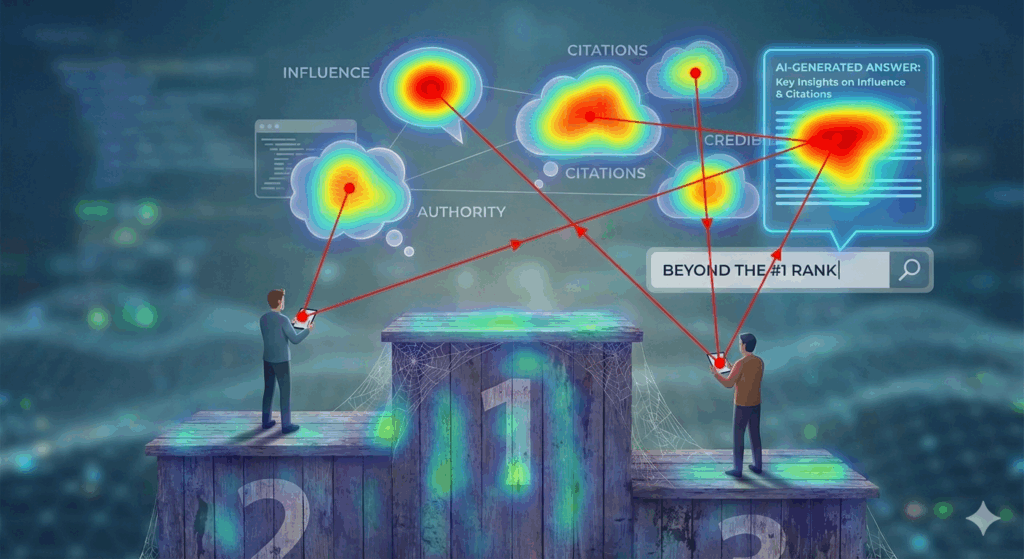
What replaces rank-chasing is influence. Are you cited? Are you framed as the default, the premium option, or the specialist? Are your strengths clearly explained – or invented by the model?
Rankings still matter, but they’re no longer the goal. In AI-mediated search, they’re a means to an end. Modern SEO is about being useful, legible, and trusted by the systems shaping decisions rather than just occupying a position on a page.
MYTH #2: “Content Is Evaluated at the Page Level”
Why it’s a myth:
Modern search and AI systems retrieve, compare, and reuse passages, not pages. Pages are containers that hold the unit of relevance – passages.
What Replaces it
Passage-level relevance, extractability, and programmatic legibility – how easily systems can retrieve and reuse atomic units of meaning.
SEO strategy used to treat the page as the core unit of evaluation. We optimized pages for keywords, measured success at the URL level, and assumed relevance was calculated across the entire document. That made sense when search engines ranked pages as whole artifacts. But in modern, AI-driven search, pages aren’t what systems read – they’re what systems pull from.
Today’s search engines and AI systems retrieve, score, and recombine passages. Using passage indexing, dense retrieval, and RAG, content is evaluated in smaller semantic units. AI answers rarely come from a single page; they’re built by selecting and synthesizing the most relevant chunks across multiple sources. As a result, large or unfocused pages can rank yet still fail to contribute meaningfully to AI responses.

This is why page-level optimization is no longer enough. What matters is passage-level relevance: each section must be self-contained, specific, and aligned to a clear intent. The future of SEO is programmatic legibility, where we’re structuring content so machines can easily identify, extract, and reuse atomic units of meaning. Modern SEO is all about building content where every block can stand on its own in a machine-generated answer.
MYTH #3" “Writing for Humans and Writing for AI Are Opposing Goals”
Why it’s a myth:
This false dichotomy ignores how AI systems work. Structure, clarity, and specificity improve both human comprehension and machine retrieval.
What replaces it:
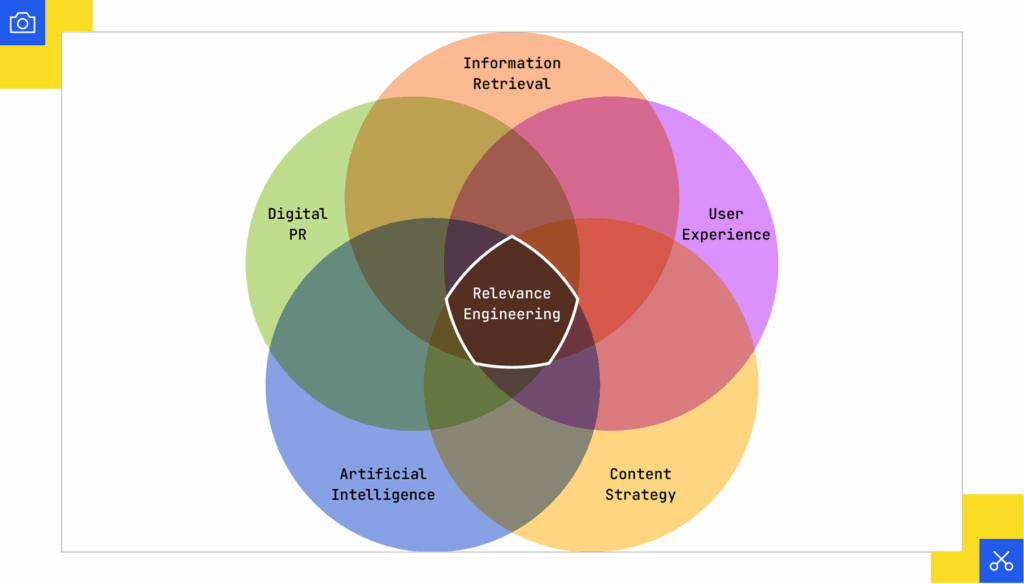
Relevance Engineering: UX-driven structure informed by retrieval mechanics, vector relevance, and entity clarity.
The idea that you must choose between “writing for humans” or “writing for AI” is one of the most harmful myths in modern SEO (as Mike King explains in response to Google’s Danny Sullivan on chunking). It assumes machines need short, mechanical content while humans want thoughtful writing. In reality, AI systems are looking for meaning, relevance, and usefulness rather than just robotic text. The same qualities that help people understand content also help machines retrieve and reuse it.
Structure, clarity, and specificity are where both audiences overlap. Clear headings, focused sections, explicit entities, and well-scoped paragraphs reduce cognitive load for readers while creating clean retrieval boundaries for AI. When content is organized, humans can skim efficiently and AI systems can extract the right passages without confusion. Poor structure fails both.
What replaces this false choice is Relevance Engineering: UX-driven writing informed by retrieval mechanics, vector relevance, and entity clarity. In an AI-mediated search world, writing for humans and machines converges around a single goal – making meaning legible, trustworthy, and reusable.
MYTH #4: “SEO Is Still Mostly About Google”
Why it’s a myth:
Discovery is now fragmented across Google AI Mode, ChatGPT, Gemini, Apple Intelligence, Perplexity, in-app agents, vertical assistants and more. Google still matters, but it no longer defines the entire search landscape.
What replaces it:
Ecosystem coverage: ensuring your content, entities, and products are usable across multiple agentic and AI-driven discovery systems.
For years, “doing SEO” meant optimizing for Google. It made sense when one engine controlled demand and visibility. But that model broke in 2025. Discovery is now fragmented across Google AI Mode, ChatGPT, Gemini, Apple Intelligence, Perplexity, and in-app assistants. Google still matters, but it no longer defines the entire discovery journey.
The shift isn’t just where people search, but how information is delivered. Many systems don’t show rankings at all; they retrieve, reason, and synthesize answers directly. Visibility now depends less on winning a SERP and more on whether your content can be used by agents that compare and recombine information. You can dominate Google and still be absent where decisions are actually formed.

What replaces Google-centric SEO is ecosystem coverage. Modern SEO ensures your content, entities, and products are legible and usable across multiple AI-driven systems. That means clear entity definitions, structured and extractable content, and strong trust signals, because in an agent-driven world, success comes from showing up wherever decisions are made.
MYTH #5: “Optimizing for a Single Query Is Enough”
Why it’s a myth:
In AI search, query fan-out expands a single prompt into many related sub-queries, meaning visibility depends on satisfying a cluster of related intents rather than matching one keyword, and narrowly focused content is often outcompeted by broader, semantically consistent sources.
What replaces it:
Query fan-out coverage replaces single-keyword optimization by addressing related questions, concepts, and entities so content consistently appears across fan-out and gets selected, synthesized, and cited by AI systems.
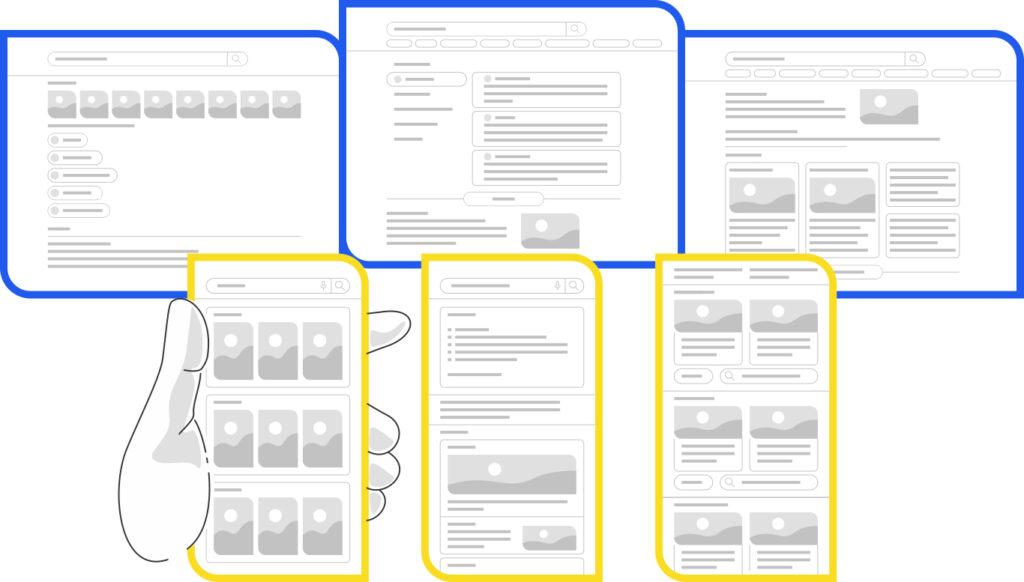
SEO strategy previously centered on optimizing for a primary keyword, which worked when search engines treated queries as literal strings. In AI-driven search, that model breaks down. Systems now use query fan-out, expanding a single prompt into many related questions and variations before retrieval begins.
During this process, content is evaluated across a cluster of related intents, not one phrasing. A page can perfectly match a keyword and still lose visibility if it lacks semantic breadth, while content that shows consistent relevance across multiple sub-queries is more likely to be retrieved, synthesized, and cited.
The new focus is query fan-out coverage: designing content to address the full landscape of related questions, concepts, and entities. By structuring content at the passage level and covering adjacent intents, you align with how AI systems evaluate relevance—because modern SEO is about showing up everywhere the query expands.
Debunk Myths With Us At SEO Week 2026
Is this your jam, digging into SEO myths as the industry see huge shifts?
This is your moment. The SEO Week 2026 Open Call for Speakers is designed to surface new voices who are actively testing, questioning, and redefining how search works in an AI-driven world.
As we head to NYC in April, the focus is on moving past outdated SEO thinking and propelling the industry forward with clearer frameworks, stronger evidence, and sharper ideas.
The deadline is approaching, and the winner earns a 30-minute mainstage slot at SEO Week 2026, with travel and hotel covered.
If you’re ready to help lead the next chapter of search, we want to see what you’re building.

Requirements and Legal Disclaimer
Requirements:
- Must be 18 years or older.
- Open to participants worldwide.
- Must work in, study, or actively contribute to SEO, content, marketing, analytics, UX, data, AI, product, or adjacent fields.
- Submissions must be original and not previously presented at another conference.
- Only one submission per person.
- Team submissions are not allowed; the competition is for individual speakers only.
- Entrants must be available for the live virtual pitch event on February 19th if selected as finalists.
- Entrants must be willing to have their pitch video, headshot, and materials used in SEO Week promotions.
- All finalists agree to the recording and distribution of the live pitch event.
- The winner must be available to attend SEO Week 2026 in New York to deliver their session.
Participation in the SEO Week Stage Challenge is voluntary and subject to all published rules and terms. By submitting, entrants confirm that their work is original, that they meet eligibility requirements, and that iPullRank may use submitted materials—including video pitches, headshots, bios, and presentation summaries—for judging and promotional purposes. Finalists consent to the recording and distribution of the live virtual pitch event. The winner must attend SEO Week 2026 to present. iPullRank is not responsible for technical issues, lost files, or travel disruptions. All judging decisions are final.
SECURE
YOUR PLACE
at SEO Week 2026
Tickets are limited. Prices increase as tiers sell out.
This is where real progress happens. The people building the next phase of AI Search will be in the room. Be one of them.
SECURE YOUR PLACE at SEO Week 2026
Tickets are limited. Prices increase as tiers sell out.
This is where real progress happens. The people building the next phase of AI Search will be in the room. Be one of them.