
SEO in the Age of AI: What’s Changed Since SEO Week 2025
Francine Monahan
December 5, 2025
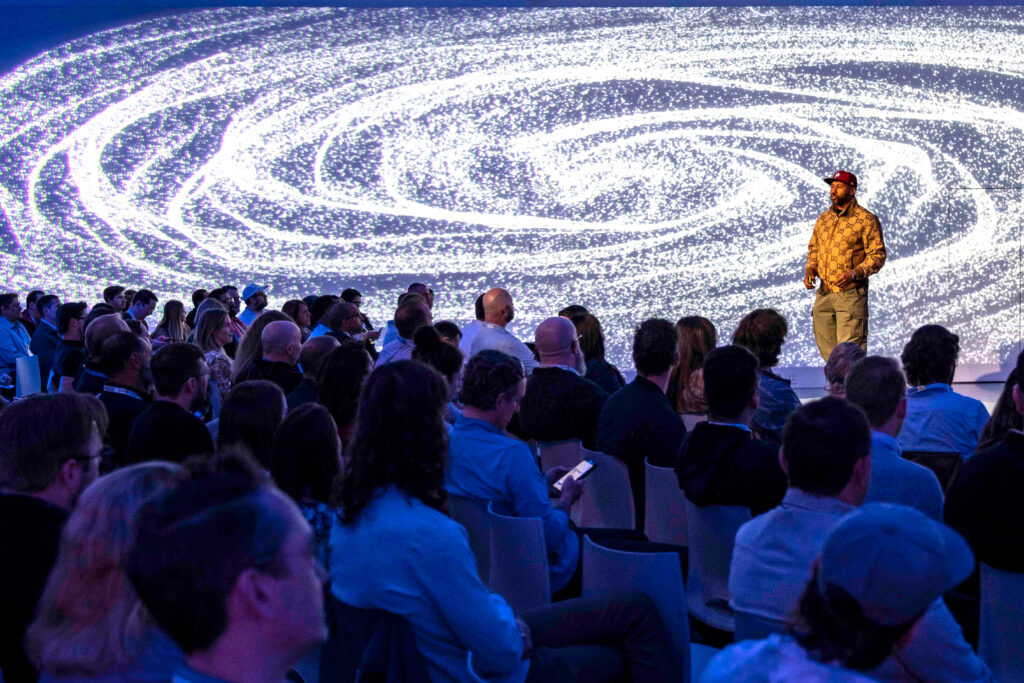
When industry leaders gathered for SEO Week in April 2025, they painted a picture of a search industry in a dramatic transition. AI was starting to integrate itself into everything we did, people were searching for things in new ways and in new places, and measuring success wasn’t so cut and dry anymore.
The biggest names in SEO came together on the SEO Week stage to share their knowledge and their predictions for the future to help everyone in the industry tackle the new search world and keep their businesses ahead of the game. Each day’s presentations had a specific theme:
- Day 1: The Science
- Day 2: The Psychology
- Day 3: The Ecosystem
- Day 4: The Future
Just a month after our first SEO Week, Google I/O happened, bringing an avalanche of new SEO and AI news, setting the stage for AI Mode, and instantly making some of the presentations at our conference out of date.
As we start preparations for SEO Week 2026, it makes sense to look back on all that’s happened since then. Seven months later, so much has changed in the industry, and many of the speakers’ predictions have come true, or are in the process of coming true as we speak.
For example, Garrett Sussman’s prediction that AI Mode would become a default search engine doesn’t seem far off. Lexi Mills predicted trust-first strategies would accelerate, which seems validated by the industry trying to prevent a web full of AI slop. JR Oakes noted LLMs catching up on recency, which is confirmed by more frequent model updates.
Some other presentations will need to be updated, but overall, our SEO Week speakers did an excellent job of staying ahead of the curve and making some great predictions.
This article examines how the SEO and AI search industry has evolved since April 2025, what aspects of the presentations could be updated, and what we might be hearing more about at SEO Week 2026 (by the way, early bird tickets are on sale now).
AI is Changing Fast
One of the most striking things to note is the sheer pace of change. It really feels like AI has ramped up in recent months. As iPullRank’s Director of Marketing Garrett Sussman noted post-conference, “the constant updates, rollouts, tools, and features that all these platforms keep introducing” have defined the second half of 2025.
“Search behavior is still shifting. It’s still messy. People are still using classic Google in huge numbers, but we can’t neglect AI Search. AI Overviews have had a real impact to search traffic. AI Mode will inevitably change the way we search too.
Results have always been personal. Now they’re getting personal on a new level. What I see and what you will always be completely different. People can now buy directly inside AI search. Adobe just reported a huge jump in AI Search traffic during Black Friday, and consumer demand isn’t slowing down.
That tension is everywhere. Executives feel the pressure to respond to the emerging channel even though revenue is not collapsing. The real question is how to get ahead of the way people search, shop, and make decisions in AI Search environments. That was the theme running through SEO Week 2025, and it will shape the strategies we expect to see recommended and evangelized heading into SEO Week 2026.” – Garrett Sussman
Let’s start by looking at some of the major developments that have taken place since April 2025.
Major Developments Since April 2025
- AI Overviews show up for 21% of keywords and 99.9% of informational intent keywords
- Increase in zero-click searches
- Multimodal and omnimedia optimization
- Expanded knowledge of query fan-out
- Agentic AI Mode improvements (link is present in the search bar, shopping comparisons, Gemini 3, Canvas integrations for travel booking, etc.)
- Conversational search
- Changing metrics and performance tracking
- Shopping within ChatGPT
- Google Try-on and Google Lens updates
- Brand is more crucial than ever
- OpenAI created its own browser: Atlas
I’m probably missing some aspects, but these seem to be the most important evolutions that had the biggest impact on marketers. These changes occurred in a mere seven months. Let’s compare them to what our speakers said at the conference in April.
What’s Happened Since SEO Week 2025
Topics were all over the map. It felt less SEO and more AI Search. We saw presentations on query fan-out, branding, the importance of video, zero-click searches, the mechanics of LLMs, the psychology behind search, and marketing strategy, an entire slew of rapid fire 30-minute quick hits.
Now we’ll go through a few individual presentations and see what’s changed since then.
Query Fan-out and Crawling
When iPullRank CEO Mike King presented The Brave New World of SEO at SEO Week in April 2025, he noted that the SEO community gained significant new public information regarding how Google processes queries for AI answers, including a more widespread community understanding of query fan-out.
Marketers now have a much better understanding of its impact on both AI Overviews (AIOs) and AI Mode. This synthetic process revealed that the matrixed approaches required for ranking in the AI surface are a critical component, requiring a change in marketer behavior.
“Query fan-out was a huge gap in our collective understanding in the space. Once I understood it, I thought it was important to do something to help everyone else be able to capitalize conceptually. That’s why I made Qforia and made it open source. I’ve seen an array of forks from it and we’re starting to see some of the secondary tools adopt it. Unfortunately, none of the legacy SEO tools have an equivalent yet, but I’m hopeful that they will catch up very soon.” – Mike King
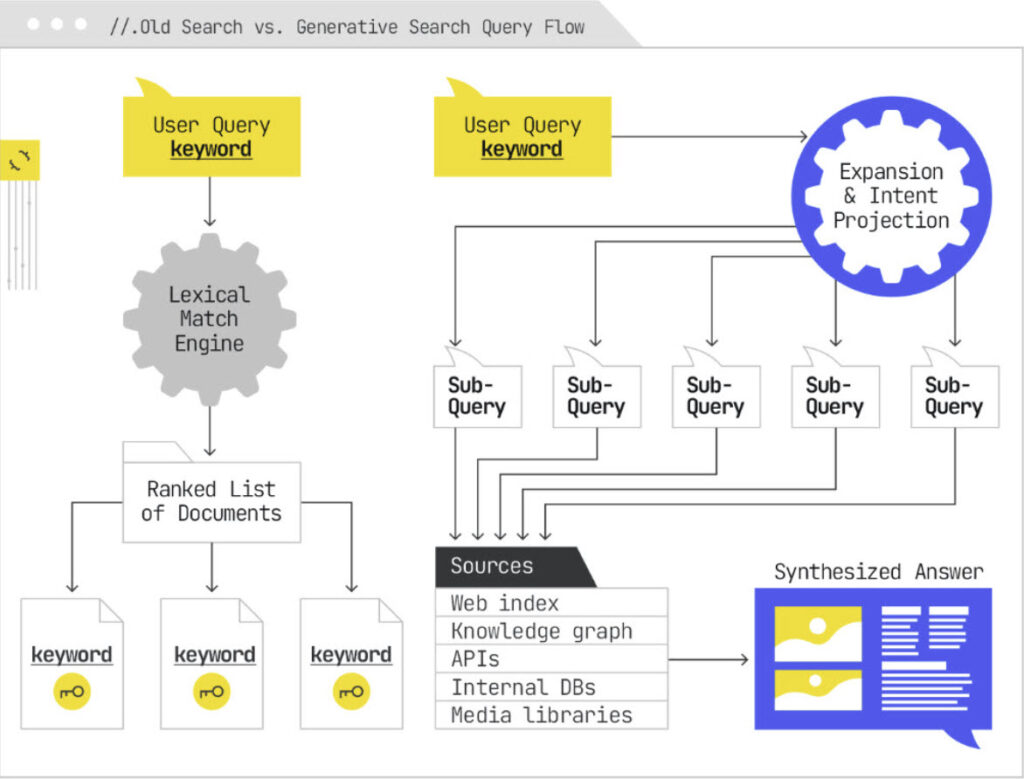
Jeff Coyle’s significant post-conference research and experimentation have revealed the complex mechanisms of how AI Overviews and AI Mode process user inputs, specifically via the query fan-out technique.
“I mentioned query fan-out and defined it in the session, but since then, I’ve spent 100+ hours decoding it and building product specifications that’ll be part of Siteimprove solutions in 2025. I have made some revelations about the importance of query processing with regard to AI Mode and AI Overviews. How the query is initially interpreted and processed plays a big role in understanding the output of AI Overview and understanding the additional versatility (and magic) of AI Mode.” – Jeff Coyle
During Jori Ford’s presentation on hybrid log file analysis, she highlighted a crucial update from Google regarding the observability of their AI crawlers. AI crawling is essentially becoming “log blind”. Google has since updated its documentation stating that it uses its existing crawlers for Gemini grounding. The crawling of resources can now be controlled via the Google-Extend product token.
This means SEOs can no longer distinguish whether a crawl is specifically for search indexing or for Gemini training/grounding by looking at the logs alone. This loss of isolation means SEOs must now rely on inferring Gemini crawls through patterns within their log files.
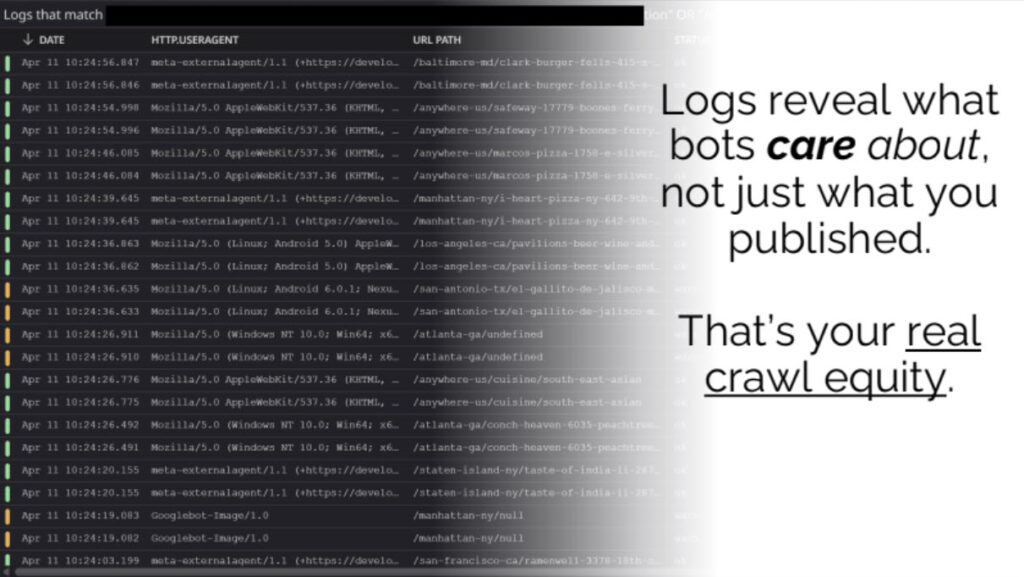
“Google is using its existing crawlers to crawl the data it’s using for Gemini for grounding. We all understood this was being done, but the fact that crawling of resources can be controlled via the Google-Extend product token means that we are log blind. What I mean by that is that you can’t distinguish whether a crawl is for search indexing or Gemini training/grounding.” – Jori Ford
Changing Search Habits
It’s pretty clear now that many people have changed their search habits. Users are not just going straight to Google anymore. ChatGPT, YouTube, TikTok, and other channels are becoming destinations and supplements for searchers. Sometimes, Google simply validates what is discovered in another channel.
Data Scientist Elias Dabbas also observed a personal change in how he uses LLMs versus classic search for technical work during his presentation.
Elias is increasingly able to spend an hour or two doing actual work with an LLM with minimal, or sometimes no, Googling. A portion of his searches have “disappeared, gone off the grid, and are never coming back,” and have been replaced by long, complex, and detailed prompts.
Programming languages are precise and designed to be unambiguous. Because of this precision, LLMs can detect character sequences in programming languages much more easily than in natural languages. Additionally, code generated by LLMs can be easily verified by running it or using automated tests.
Ross Hudgens noted an increase in homepage visits via AI surfaces during his talk. His company released a study in May suggesting that LLMs and AIOs are driving increased homepage visits.
“We did compile data on homepage visits going up due to LLMs/AIOs since the talk, which further speaks to the value of brand,” he said.
However, it’s unclear whether that data still stands today. More recent studies from Wil Reynolds and his team at Seer show an overall decrease in clicks due to the appearance of AI summaries that provide searchers with all the information they need without having to click through to a website.
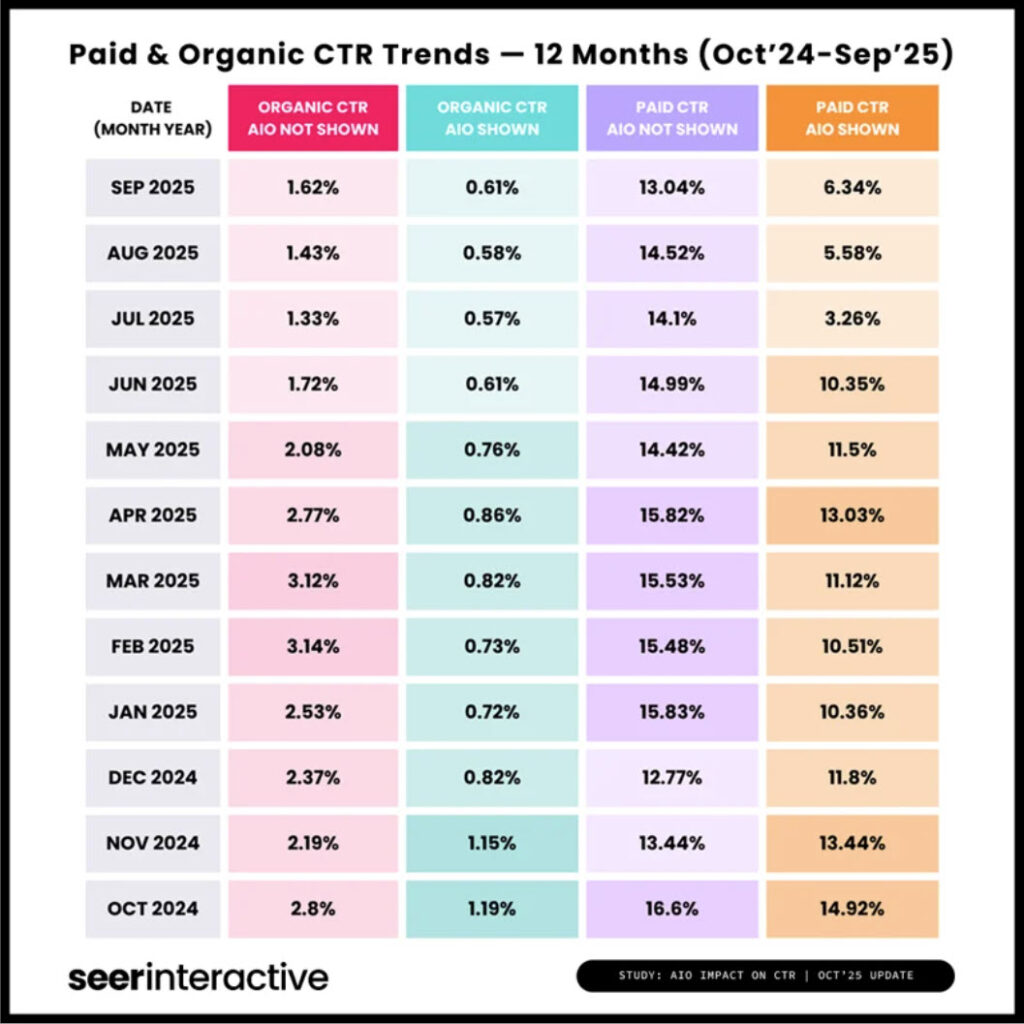
As James Cadwallader said during his talk, a zero-click future has become “clearer and clearer as we go” every week, citing the recent ChatGPT integration with Shopify. Additionally, the internal sophistication of LLM retrieval is increasing: OpenAI’s model o3 is doing so much web retrieval that the previous observation that “lazy agents” cheated by defaulting to comparative listicles is becoming “less true”.
Google Discover has also been impacted by the advent of AI. John Shehata discussed these trends in his talk, but the Discover page has seen even more changes since April 2025, causing publishers to experience traffic drops.

“Since SEO Week, we’ve observed increased experimentation in Google Discover — including AI-generated summaries, new image formats, and content reshuffling that’s causing sharp volatility across verticals.” – John Shehata
It’s clear that Google continues to test AI integration throughout its entire content ecosystem, not just search.
YouTube has been seeing changes as well. Phil Nottingham’s presentation looked at the importance of video in search, and how to properly use YouTube Shorts, which have grown in visibility since April 2025 and are worth more of an investment from marketers.
“Seems like YouTube Shorts is now competitive with TikTok in terms of viewership. Even more reason to invest heavily in YouTube!” Phil said.
The Metrics Revolution: Beyond Traffic
Due to these changes in search behavior, tracking success metrics requires new methods and measurements. Since SEO Week, alternative metrics have become even more standard, including:
- Input metrics: Passage relevance, entity salience, bot activity, synthetic query rankings
- Channel metrics: Share of voice, citation rate, citation quality, citation sentiment
- Performance metrics: Traffic, events, conversions, engagement depth
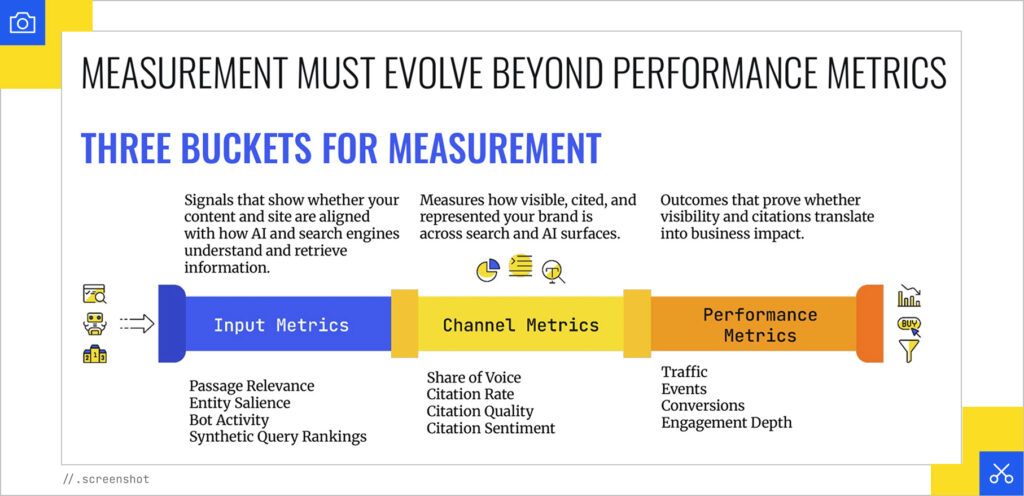
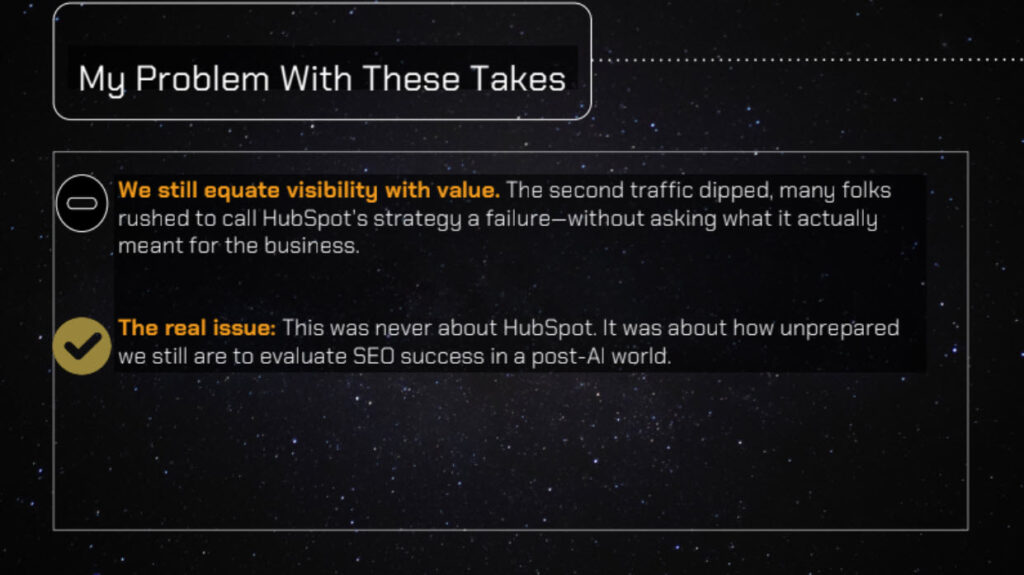
Bianca Anderson discussed the idea that raw organic traffic is no longer the sole key metric of SEO success, and that this belief has moved from a contentious viewpoint to one that is broadly accepted across the industry.
“At the time of the presentation, the idea that traffic was no longer a key metric might not have been widely accepted,” she said. “But now, it feels like that’s pretty well understood across the industry.”
Legal Updates
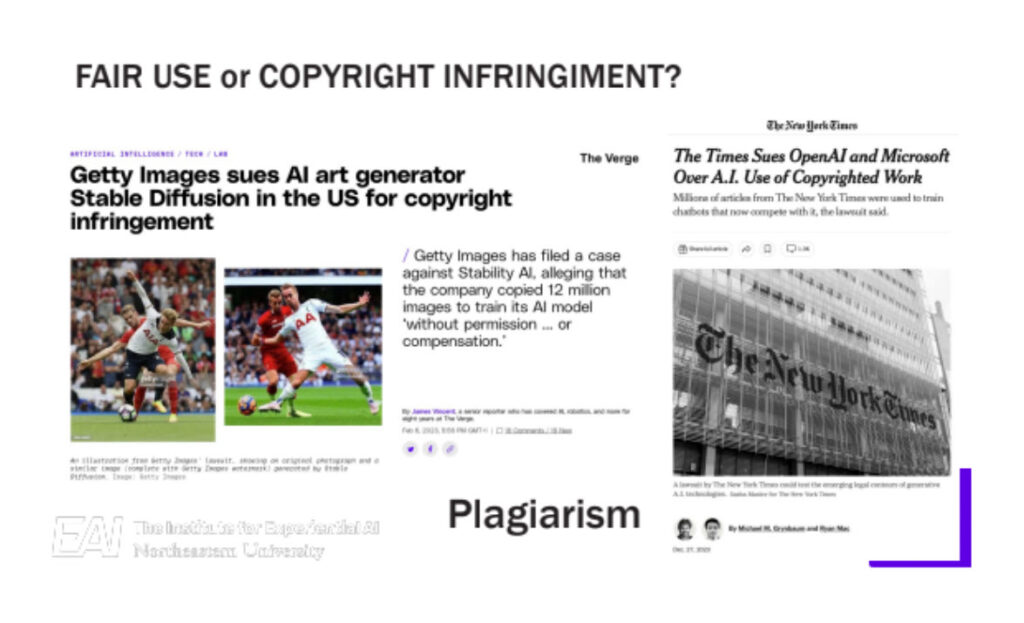
Google is already dealing with its own antitrust lawsuit, but AI companies are more commonly being sued these days. During his talk, Dr. Ricardo Baeza-Yates mentioned companies, including OpenAI and Microsoft, have faced lawsuits regarding dangers to mental health.
However, at the time of his presentation, Anthropic and Meta were being sued for copyright infringement. As an update, Anthropic settled, and Meta won. This is a big deal for the future of AI and content on the web.
“One of the most important developments is how recent rulings in open copyright cases, such as those involving Anthropic and Meta, have upheld the idea that using copyrighted content can qualify as fair use.” – Dr. Ricard Baeza-Yates
The Shopping Revolution: ChatGPT Goes Transactional
Multiple SEO Week speakers, including Garrett Sussman and James Cadwallader, mentioned the impending ChatGPT and Shopify integration, but now ChatGPT shopping has become reality.
James spoke about the agent experience and how much that would come into play with shopping. During his talk, he predicted that agents will be the only visitors of websites or the primary visitors of websites. Although we’re not quite there yet, the new developments in AI shopping seem to be moving in that direction.
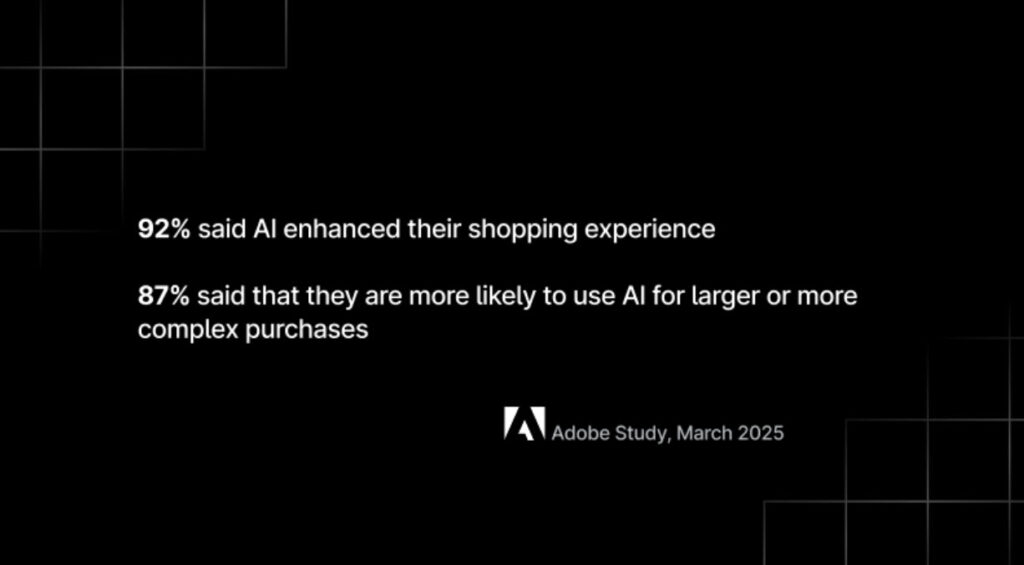
AI shopping updates since SEO Week include:
- OpenAI launched “Instant Checkout” with the Agentic Commerce Protocol
- Currently supports U.S. Etsy sellers, Shopify, and Walmart
- Products appear organically in ChatGPT responses with direct purchase capability
- Google is testing shopping features within AI Mode
The Permanent Search Transformation
The changes since SEO Week 2025 represent a permanent structural transformation of search. Zero-click searches aren’t declining, AI Overviews aren’t being rolled back, and shopping in ChatGPT isn’t an experiment. It’s all here now, and more is on the horizon.
For SEO professionals and marketers, the message is clear: optimize for AI visibility, track alternative metrics, build brand authority across platforms, and prepare for a world where the search results page is no longer the starting point.
The speakers of SEO Week 2025 saw this future coming. Seven months later, we’re living in it. Our next conference will need to focus less on predicting the AI search revolution and more on mastering it. Are you ready?
Early bird tickets are available now for SEO Week 2026. It’s from April 27 to 30 in NYC. Get your tickets today and join the conversation.
And if you think you have what it takes to take the stage at SEO Week, we’re looking for some new voices in our open call for speakers. Make your pitch by January 31 and earn the stage.
SECURE
YOUR PLACE
at SEO Week 2026
Tickets are limited. Prices increase as tiers sell out.
This is where real progress happens. The people building the next phase of AI Search will be in the room. Be one of them.
SECURE YOUR PLACE at SEO Week 2026
Tickets are limited. Prices increase as tiers sell out.
This is where real progress happens. The people building the next phase of AI Search will be in the room. Be one of them.